Project Overview
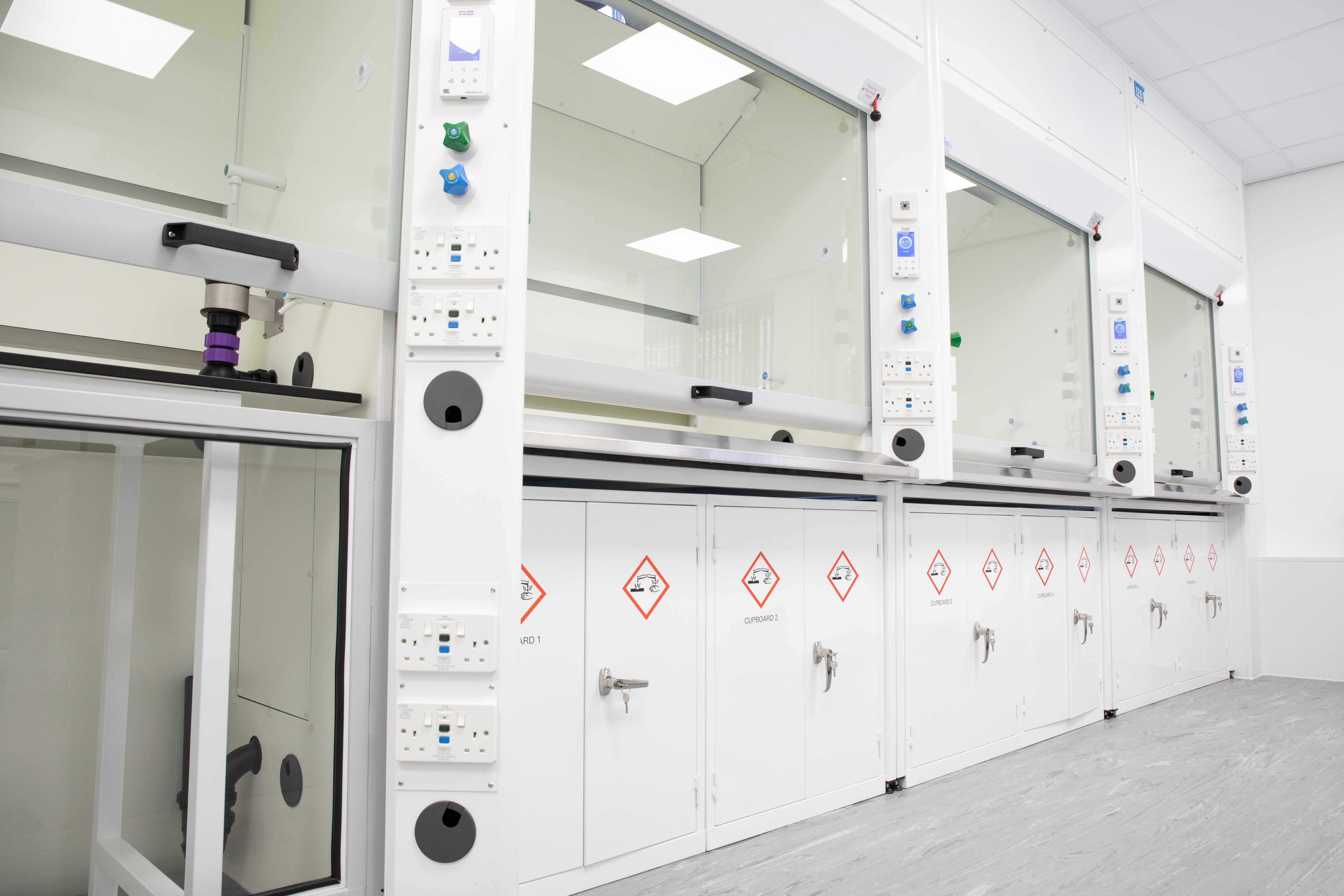
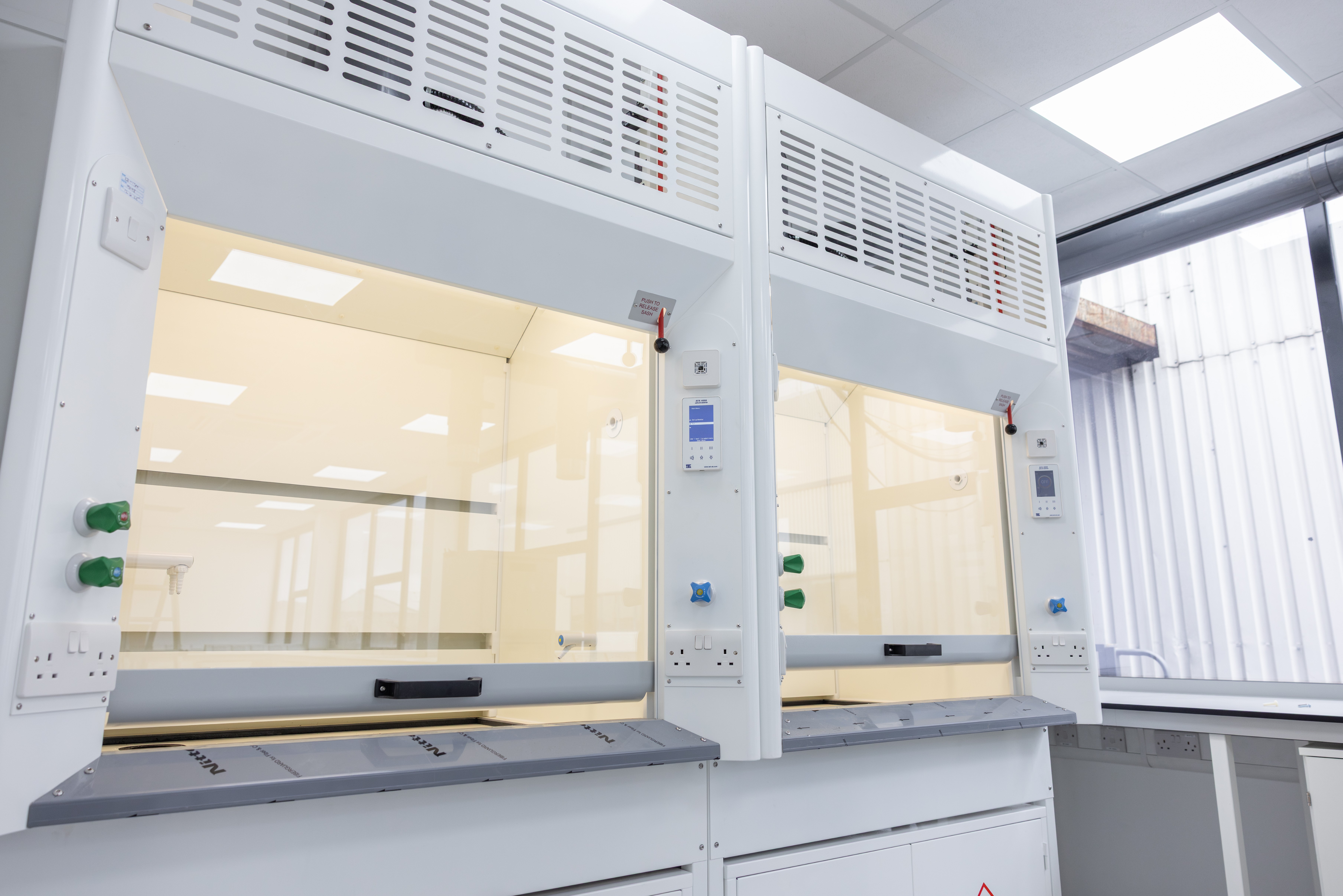
Our team was appointed to equip a specialised Portakabin laboratory for a leading Battery Research Company. The project required the installation of seven high-performance VAV fume cupboards designed to facilitate intensive research and development.
Given the restrictive nature of Portakabin labs, the focus was on delivering a permanent-quality extraction solution within a modular footprint, ensuring the facility met all safety standards for battery component testing.
The Challenge
This project presented two significant design constraints that required a bespoke engineering approach:
- Low Ceiling Heights: Portakabins offer restricted vertical space, making the installation of standard ducting and VAV controllers extremely difficult.
- Zero Ceiling Penetration: The client’s structural requirements strictly prohibited any penetrations through the ceiling. This meant the entire extraction manifold and service routes had to be designed to exit through the walls while maintaining the necessary pitch and airflow efficiency.
Our Solution
To address the height and structural constraints, we designed a horizontal extraction headers that utilised wall-exit points rather than traditional vertical stacks.
To manage the laboratory’s environment and operational costs, we implemented a sophisticated VAV and bleed air damper system. By utilising TEL AFA4000/E VAV controls, the system automatically adjusts the volume of air extracted based on sash position.
Key technical features included:
- Bleed Air Dampers: These were integrated to maintain a constant minimum laboratory pressure while allowing the fume cupboards to “turn down” when not in use.
- Energy Optimisation: By minimising the volume of conditioned air extracted, we significantly reduced the lab’s heating and energy bills.
- Low-Profile Ducting: Bespoke ducting layouts were used to maximise the available headspace for researchers.
Results
The installation was completed over a six-week period, transforming a modular Portakabin into a high-tech, energy-efficient research hub. Despite the physical limitations of the building, the laboratory now operates with the same precision and safety as a traditional bricks-and-mortar facility.